Wiring a gazebo safely and practically — the quick answer
If you want to power a ceiling fan, install lights, and add a couple of outlets in a backyard gazebo, plan for at least one dedicated 15A or 20A circuit, outdoor-rated wiring, GFCI protection, weatherproof boxes, and a licensed electrician to pull permits if your local code requires it. Done correctly, wiring a gazebo is straightforward: choose your power source, size the circuit to the combined load (fan + lights + outlets), use outdoor-rated conduit or UF cable where required, and protect every outdoor receptacle with a GFCI.
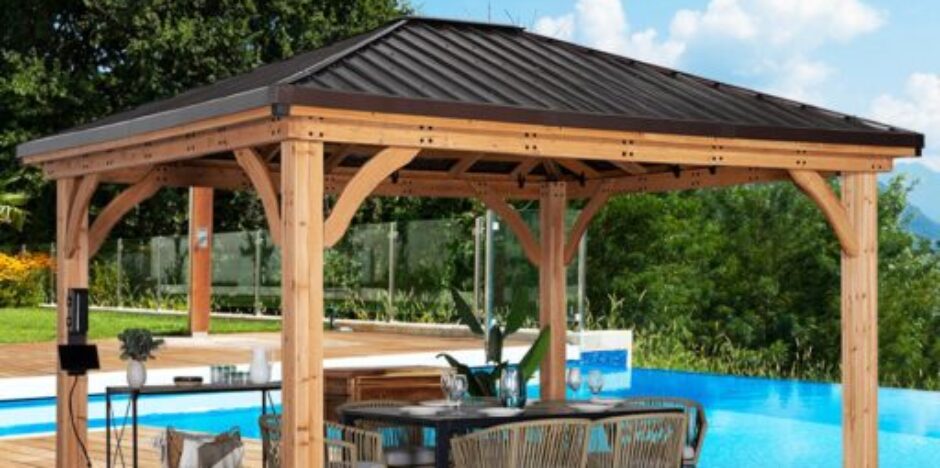
This article walks through the practical steps, safety and code considerations, tips for running wire through cedar posts, fan support, and why the Backyard Discovery Arcadia 12′ x 9.5′ Cedar Wood Outdoor Gazebo is a great fit for a wired gazebo project.
Basic planning and code checklist
- Determine power source: run a branch circuit from your main panel or a nearby subpanel.
- Check local codes and permits: most jurisdictions require a permit for new circuits outdoors.
- Pick the right circuit size: 15A (120V) for a fan + lights is common; use 20A if you expect heavy tool use at the outlets.
- Protect all outdoor outlets with GFCI and use weatherproof, in-use covers.
- Use outdoor-rated cable: THHN in conduit, or UF cable where allowed; bury to required depth or use conduit for above-ground runs.
- Use waterproof junction boxes and stainless-steel screws near the cedar to resist corrosion.
Step-by-step wiring overview
Below is a practical workflow you can use to prepare your gazebo wiring project:
- Layout: decide where the ceiling fan, lights, switches, and outlets will go. Keep switches near an entry for convenience.
- Load calculation: add the wattage of the fan motor (typically 50–100W), lighting fixtures, and any expected plugged-in loads. Make sure the total draw leaves 80% of breaker capacity per NEC continuous-load guidance.
- Run conduit or buried cable from the house or panel to the gazebo base. Use PVC conduit or metal conduit depending on local code and appearance preferences.
- Bring power into a dedicated, code-approved outdoor-rated junction box or subpanel if feeding multiple circuits or larger loads.
- Pull conductors to each fixture and outlet location. Use cable clamps and strain relief at boxes.
- Install a GFCI-protected receptacle for outdoor use and mount light fixtures and fan to rated ceiling boxes. Fans require a fan-rated box secured to structural members.
- Bond grounding conductors to metal boxes and support structures, and test GFCI and circuit function before finishing.
Running wire through cedar posts
With cedar gazebos, it’s common to run wiring inside posts for a clean look. Drill a pilot hole in the post center or use the pre-drilled holes many Backyard Discovery kits include. Protect the cable with conduit or a grommet where it passes through wood to avoid chafing, and keep junction boxes accessible (behind removable trim or under the roof). If you’re building the gazebo yourself, plan these routes before staining or sealing the wood.
Why the Backyard Discovery Arcadia 12′ x 9.5′ fits this wiring project
The Backyard Discovery Arcadia 12′ x 9.5′ Cedar Wood Outdoor Gazebo is a compact, well-built model that provides enough structural support and ceiling height for a standard ceiling fan and multi-point lighting. Its pre-drilled posts and straightforward framing make routing wires and mounting a fan box easier than with a custom or older structure. For homeowners who want a dedicated, cozy outdoor living space with power, lighting, and a fan, the Arcadia size is often just right.
We recommend the Backyard Discovery Arcadia 12′ x 9.5′ Cedar Wood Outdoor Gazebo when you want a ready-to-assemble gazebo that’s simple to wire and looks high-end once finished.

Practical tips and safety reminders
- If you’re not a licensed electrician, hire one to pull permits and make final connections — mistakes with outdoor wiring are dangerous and costly.
- Use fan-rated boxes bolted to framing, not just to the gazebo ceiling sheathing.
- Label the circuit in your main panel and leave a documented wiring diagram inside an accessible junction box.
- Consider LED fixtures to minimize heat and reduce load on the circuit.
Watch a Real Backyard Discovery Gazebo Build in 4K
Before you commit to a gazebo, it helps to see one go together in the real world. Preston and his brother built a Backyard Discovery Arcadia 12′ x 9.5′ cedar gazebo in a single evening, start to finish.
In the 4K video below, you can see how the pre-cut, pre-drilled cedar pieces fit together, how the hardware is organized, and how manageable the process is for just two people. The fresh cedar smell, solid posts, and overall build quality are a big part of why we like Backyard Discovery so much.
If you want to see more photos and details from this exact build, Preston also wrote about the process on his personal site: PrestonShamblen.com/backyard-discovery-arcadia-gazebo-setup. It includes tips, notes, and behind-the-scenes details from the same evening.
Conclusion
Wiring a gazebo for fans, lights, and outlets is a practical weekend upgrade when planned around load, protection (GFCI), and outdoor-rated materials. The Backyard Discovery Arcadia 12′ x 9.5′ is a great primary recommendation for a homeowner-sized wired gazebo because its framing and pre-drilled parts simplify routing and mounting. Remember: plan, follow local code, and hire a pro for the final electrical connections — and don’t forget that a gazebo like this can be assembled by two people in a single evening, as shown in Preston’s build video and article.


