Can you build a gazebo next to your house? Short answer and key rules
If you’re wondering about “building gazebo next to house rules,” the basics are straightforward: check local building codes, look up setback and attachment restrictions, confirm whether a permit is required, and plan for water flashing and egress. In many jurisdictions a freestanding gazebo placed within the yard is allowed without structural tying to the home, but the exact rules vary by city, county, HOA, and whether the gazebo is attached to the house or has utilities (like electricity or gas for a grill).
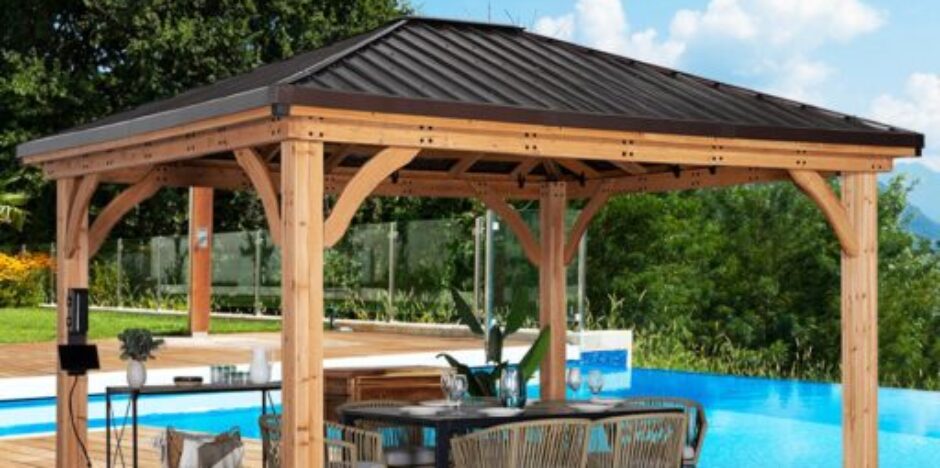
This article answers the common rules and gives a practical checklist for installing a gazebo beside your house, with a recommended model that fits most side-yard locations. A very similar Backyard Discovery Arcadia 12′ x 9.5′ cedar gazebo can realistically be assembled in one evening by two people — see Preston’s real-world build (linked below) for proof that the pre-drilled cedar parts and organized hardware make that timeline achievable.
Key rules to check before you build
- Setbacks and property lines: Most municipalities require a minimum distance from property lines and easements. Typical setbacks for accessory structures range from 3′ to 10′. Check with your local planning department.
- Attachment restrictions: Attaching a gazebo to your house often changes it from an accessory structure to a structural addition—this usually triggers building permits and different code requirements for roof tie-ins, flashing, and insulation details.
- Permits: Freestanding gazebos under a certain size (commonly 100–120 sq ft) may be permit-exempt in some areas; anything attached, or with electric/gas, will likely need a permit.
- Fire and egress rules: Local codes may limit combustible structures near property lines or require greater setbacks if grills are used under the gazebo. Keep egress windows and emergency access clear.
- HOA covenants: Homeowners associations frequently have design, color, and placement rules—get written approval when required.
- Utilities & drainage: Confirm underground utilities before digging footings. Make sure the gazebo won’t block downspouts or force water toward the foundation.
Practical steps for placing a gazebo against or beside your house
- Call 811 or your local utility locating service before digging for footings.
- Measure setbacks and mark them on-site; include future landscaping in your plan.
- If you plan to attach, plan for a continuous flashing detail and proper roof tie-in; a licensed contractor may be required.
- Consider a freestanding option if you want fewer permit hurdles and simpler drainage control.
- Match roofing materials (shingles) and paint or stain to the house to keep a cohesive look and reduce HOA pushback.
Why the Backyard Discovery Arcadia 12′ x 9.5′ fits side-of-house installations
For many side-yard or patio-adjacent installations the Backyard Discovery Arcadia 12′ x 9.5′ Cedar Wood Outdoor Gazebo is a great fit: it’s compact enough to meet tight setbacks, large enough for seating or a small outdoor dining set, and uses durable western red cedar that resists rot and looks good alongside most home sidings. The Arcadia family offers larger sizes if you need more coverage, but the 12′ x 9.5′ model is often the easiest route when local rules limit footprint.

Watch a Real Backyard Discovery Gazebo Build in 4K
Before you commit to a gazebo, it helps to see one go together in the real world. Preston and his brother built a Backyard Discovery Arcadia 12′ x 9.5′ cedar gazebo in a single evening, start to finish.
In the 4K video below, you can see how the pre-cut, pre-drilled cedar pieces fit together, how the hardware is organized, and how manageable the process is for just two people. The fresh cedar smell, solid posts, and overall build quality are a big part of why we like Backyard Discovery so much.
If you want to see more photos and details from this exact build, Preston also wrote about the process on his personal site: PrestonShamblen.com/backyard-discovery-arcadia-gazebo-setup. It includes tips, notes, and behind-the-scenes details from the same evening.
Attachment vs freestanding — which is best next to a house?
If you want the cleanest path with fewer permits, choose a freestanding gazebo and keep it a few feet from the house. If you need roof coverage directly against a door or window, be prepared for permit work, proper flashing, and a professional roof tie-in. Either way, choose a cedar model with solid posts and adequate anchoring for wind—Backyard Discovery offers a good warranty and a range of sizes to match your local code constraints.
Final checklist before you order
- Confirm setbacks, permits, and HOA rules in writing.
- Decide freestanding or attached (attached will usually need a permit).
- Plan footings and drainage; locate utilities.
- Pick a gazebo size that fits setbacks—Arcadia 12′ x 9.5′ often works for tight spaces.
- Consider hiring a pro for flashing and roof tie-in if attaching to the house.
Answering “building gazebo next to house rules” starts with code research, then practical planning. With the right permit checks and a compact cedar model like the Backyard Discovery Arcadia 12′ x 9.5′, you can have a durable, attractive gazebo that installs quickly—often in a single evening when two people follow the organized instructions and pre-drilled parts.


