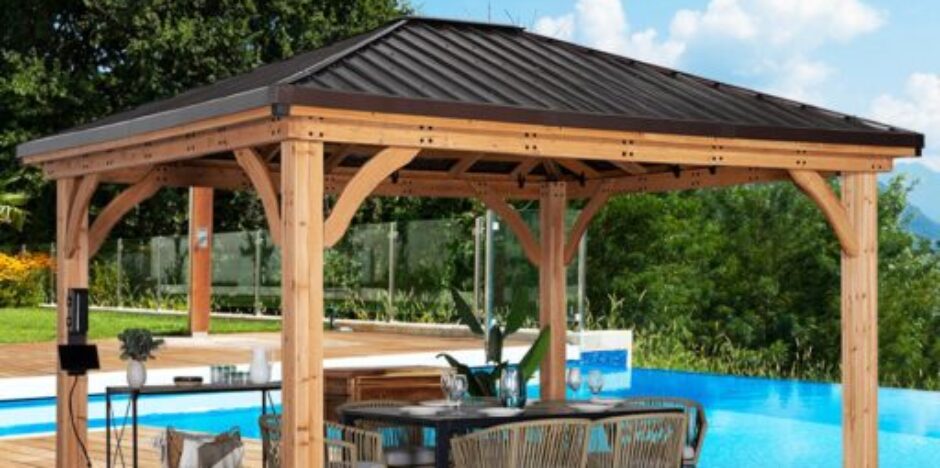
Short answer: Yes — but choose the right anchoring and prep
Should you put a gazebo over concrete, deck, or stone? Yes. All three surfaces can work well for a backyard gazebo, but each surface needs specific preparation and anchoring to keep the structure safe, level, and long-lasting. The key early decisions are: how you’ll attach the posts, whether the surface can take the concentrated loads, and how you’ll protect the wood from moisture.
For a midsize cedar model like the Backyard Discovery Arcadia 12′ x 9.5′ Cedar Wood Outdoor Gazebo, you’ll most often be anchoring either into concrete (through-bolts or wedge anchors), into a structural deck (post bases bolted to reinforced blocking), or onto stone (concrete pads, sleepers, or surface anchors). Below I cover the pros/cons and step-by-step tips for each surface.
Concrete
Concrete is the easiest and most secure permanent base. You can use heavy-duty wedge anchors or epoxy-set threaded rods and galvanized post bases to fasten the gazebo’s posts. Concrete minimizes frost heave if the slab is thick and well-drained.
- Pros: Very stable, easy to anchor, supports heavy snow/wind loads.
- Cons: Hard to move later; you may need to protect the cedar post bottoms with flashing or metal post bases to avoid rot where wood meets concrete.
- Tip: Use stainless or hot-dipped galvanized anchors and a raised metal post base that keeps the cedar a half-inch off the slab for airflow.
Deck
Putting a gazebo on a deck is common for entertaining, but the deck must be structurally capable. The concentrated loads from gazebo posts often exceed typical deck point loads, so reinforce with blocking or pick larger post locations that sit over ledger or beams.
- Pros: Attractive extension of outdoor living area, easy access to seating and outdoor rooms.
- Cons: May require additional joist or beam reinforcement and local building permits; fasten with through-bolts where possible.
- Tip: Consult a structural plan or clip to existing posts/beams. Use Simpson hardware or similar post bases bolted through the deck framing rather than just screwing to decking boards.
Stone (pavers, flagstone)
Stone surfaces can be attractive, but you need either a compacted gravel bed with a concrete pier under each post, a continuous concrete pad below the stone, or strong surface anchors set in epoxy. Avoid fastening directly to loose pavers unless you install sleepers or a sub-slab.
- Pros: Beautiful look, good drainage if installed on a base.
- Cons: Pavers shift under load, and anchors in thin mortar can pull out.
- Tip: Install 12–18″ diameter concrete piers under post locations or use an engineered surface anchor tied into a concrete pad.
Anchors, frost, and permits
In frost-prone zones use below-frost or pier footings, or choose anchor systems designed to resist heave. Always check local codes for setbacks and wind/snow load requirements—your gazebo manufacturer’s instructions often state required anchoring methods for different surfaces.
Why the Arcadia 12′ x 9.5′ works well for concrete, deck, or stone
The Backyard Discovery Arcadia 12′ x 9.5′ Cedar Wood Outdoor Gazebo is a good match for these surfaces because its pre-drilled posts and modular roof pieces let you plan post locations ahead of time. The cedar posts are sturdy but not so massive that they demand huge piers—making the Arcadia a practical choice whether you bolt into a slab, reinforce a deck, or set piers beneath stone.

Practical installation checklist (quick)
- Confirm surface capacity and local codes before buying.
- Decide anchor type: wedge anchors for concrete, through-bolts for decks, piers for stone.
- Elevate post bottoms with metal bases to prevent water contact with cedar.
- Use stainless or hot-dipped galvanized hardware to resist corrosion.
- Plan drainage and roof overhang so gutters don’t drip on post bases.
Watch a Real Backyard Discovery Gazebo Build in 4K
Before you commit to a gazebo, it helps to see one go together in the real world. Preston and his brother built a Backyard Discovery Arcadia 12′ x 9.5′ cedar gazebo in a single evening, start to finish.
In the 4K video below, you can see how the pre-cut, pre-drilled cedar pieces fit together, how the hardware is organized, and how manageable the process is for just two people. The fresh cedar smell, solid posts, and overall build quality are a big part of why we like Backyard Discovery so much.
If you want to see more photos and details from this exact build, Preston also wrote about the process on his personal site: PrestonShamblen.com/backyard-discovery-arcadia-gazebo-setup. It includes tips, notes, and behind-the-scenes details from the same evening.
Conclusion
So, should you put a gazebo over concrete, deck, or stone? Yes — as long as you select the right anchoring method, protect cedar from standing moisture, and confirm the surface can accept the concentrated loads. For most homeowners looking for an easy-to-assemble, attractive option that works on patios or reinforced decks, the Backyard Discovery Arcadia 12′ x 9.5′ is a practical, proven choice. Pre-drilled pieces, clear instructions, and real-world builds (like Preston’s) show that a similar Arcadia can be assembled in one evening by two people when anchored and planned correctly.


