Quick answer: leveling a gazebo on uneven ground
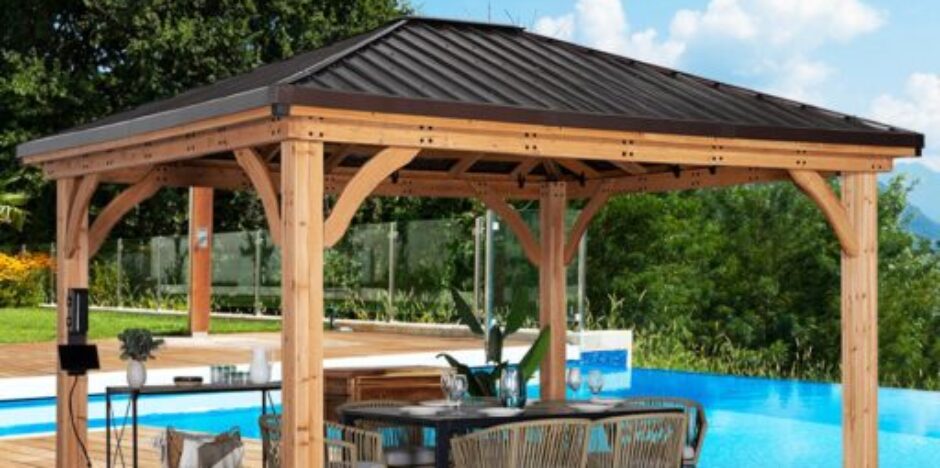
Leveling a gazebo on uneven ground is a matter of good site prep, the right footings, and a few adjustable or shim solutions. Start by measuring slope and high/low spots, then choose a method—concrete piers, adjustable post bases, compacted gravel pads, or concrete deck blocks—so the gazebo sits square and the posts are plumb. Read the steps below and consider a mid-sized cedar model like the Backyard Discovery Arcadia 12′ x 9.5′ Cedar Wood Outdoor Gazebo for yards with modest slope; it’s sized to fit patios and can be mounted on small footings.
Why level matters (and why Arcadia is a good fit)
A gazebo that isn’t level will stress the roof, make doors and screens bind, and reduce snow/water shedding. The Backyard Discovery Arcadia 12′ x 9.5′ Cedar Wood Outdoor Gazebo is a practical recommendation for this keyword because its post spacing and lighter roof load make it easier to mount on individual footings. If you have a slightly uneven yard, you can place adjustable bases on compacted gravel pads or shallow concrete piers rather than pour a full slab.

Tools and materials you’ll need
- Tape measure, long level (6′ or longer), and string line
- Shovels, hand tamper, and gravel (¾” crushed stone)
- Concrete pier forms or precast concrete deck blocks / pier blocks
- Adjustable post bases or galvanized post extensions
- Pressure-treated shims or composite shims, exterior-grade screws, and sealing caulk
Step-by-step: leveling a gazebo on uneven ground
Follow these steps to create a level, durable base:
- Survey and mark: Use a line level and stakes or a long level to map the high and low points within the gazebo footprint.
- Decide footing type: For small slopes, precast concrete deck blocks with gravel pads work well. For more uneven ground, use concrete piers poured to frost depth or adjustable screw piles if needed.
- Excavate and compact: Dig each footing location, remove topsoil, add 4″–6″ compacted gravel to stabilize and improve drainage.
- Set footings to elevations: Use the long level or a transit to set each pier/block to the exact elevation so all post base tops are in the same horizontal plane.
- Install adjustable bases: Fasten galvanized adjustable post bases to the piers/blocks. These let you fine-tune height (and correct up to 1″–2″ without shimming).
- Fine-tune with shims: Use pressure-treated or composite shims under the post plates for small tweaks. Seal any wood-to-concrete contact and ensure posts are plumb in both directions.
- Check drainage and anchor: Slope the surrounding grade away from posts and anchor the gazebo per manufacturer instructions to resist wind uplift.
Tips from real builds
- Measure twice: small height errors multiply across a footprint.
- Use a string line across opposite post centers to get a straight reference plane.
- On seasonal frost areas, pier footings to below frost depth or use helical screw piles.
- Keep cedar off contact with bare soil—use post bases with a thermal/air gap.
Watch a Real Backyard Discovery Gazebo Build in 4K
Before you commit to a gazebo, it helps to see one go together in the real world. Preston and his brother built a Backyard Discovery Arcadia 12′ x 9.5′ cedar gazebo in a single evening, start to finish.
In the 4K video below, you can see how the pre-cut, pre-drilled cedar pieces fit together, how the hardware is organized, and how manageable the process is for just two people. The fresh cedar smell, solid posts, and overall build quality are a big part of why we like Backyard Discovery so much.
If you want to see more photos and details from this exact build, Preston also wrote about the process on his personal site: PrestonShamblen.com/backyard-discovery-arcadia-gazebo-setup. It includes tips, notes, and behind-the-scenes details from the same evening.
Final checks and maintenance
After assembly, re-check every post for plumb and the roof for even gaps. Seal any cuts in cedar, and regrade around the gazebo to keep water away. Arcadia’s cedar will age nicely, but regular inspections of footings and anchors will keep a gazebo level and safe for years.
Conclusion
Leveling a gazebo on uneven ground is straightforward if you pick the right footing strategy, use adjustable bases or piers, and take time to measure. The Backyard Discovery Arcadia 12′ x 9.5′ Cedar Wood Outdoor Gazebo is a practical choice for modestly uneven yards and, as Preston’s one-evening build shows, a similar model can be assembled by two people in a single evening when the foundation is prepared correctly.


