Quick answer: How to manage electrical cords in a gazebo
Gazebo electrical cord management is about planning a safe permanent or temporary route for power, using outdoor-rated wiring and GFCI protection, and keeping cords protected from weather and trip hazards. For short-term lighting or speakers, use heavy-duty outdoor-rated extension cords and cord covers; for lights, fans, or heaters consider a permanent, GFCI-protected outlet installed by a licensed electrician.
Below you’ll find practical routing options, load and safety tips, and a recommended gazebo that makes wiring easy if you want a compact cedar model that’s straightforward to wire and outfit for lights and fans.
Plan the route first
Before cutting or drilling, decide whether you want temporary power (extension cords) or a permanent solution (in-wall or in-post wiring). Temporary cords can work for parties or seasonal use, but a permanent, code-compliant outlet is safer for sustained loads like heaters or ceiling fans.
Common routing options
- Surface-mounted conduit: Runs conduit along the underside of decking or the gazebo beam, with conduit clamps hiding the cable. Good when you want a visible but protected run.
- In-post wiring: Drill a passage inside one post and drop a weatherproof, GFCI-protected receptacle into a post-mounted box. This looks clean and keeps wires hidden.
- Underground conduit: For feeds from the house, run conduit underground to a post-mounted or nearby exterior box. Use PVC conduit and pull-rated cable; follow local code for burial depth and conduit type.
- Temporary runs: Heavy-gauge, outdoor-rated extension cords (preferably flat ones for thresholds) routed under a cord cover. Only for short-term use.
Safety essentials
- Always use a GFCI-protected circuit for outdoor outlets and any outlet serving the gazebo.
- Never run indoor-rated extension cords outdoors; always pick cords rated for outdoor use and the amperage of your device.
- Avoid daisy-chaining multiple extension cords. Use a single, appropriately gauged cord or install a permanent outlet.
- Protect cords with weatherproof in-use covers (while plugged in) and use UV-resistant cord covers or conduit where the cord is exposed.
- Label circuits and keep heater and fan loads on their own 20A circuit when possible—consult an electrician for load calculation.
Tools and products that make cord management easy
- Cable staples and stainless-steel clips for securing cords to posts or beams.
- Outdoor-rated junction boxes and in-use weatherproof covers.
- Flat, heavy-gauge outdoor extension cords for door thresholds and temporary runs.
- Rubber cord covers or ramp covers to prevent tripping over temporary cords used during gatherings.
Why this works well with the Arcadia
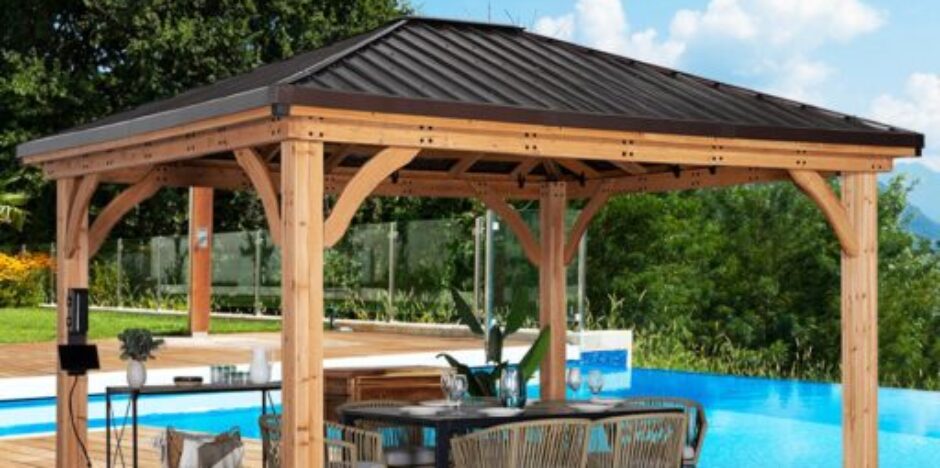
If you want a compact cedar gazebo that’s easy to wire and furnish, consider the Backyard Discovery Arcadia 12′ x 9.5′ Cedar Wood Outdoor Gazebo. Its posts and roof beams provide obvious mounting points for light fixtures and a fan, and the smaller footprint means shorter, simpler runs from an existing exterior GFCI outlet on your house. For homeowners who prefer a clean look, one post can hide a discreet outlet box and switch for lights.

Watch a Real Backyard Discovery Gazebo Build in 4K
Before you commit to a gazebo, it helps to see one go together in the real world. Preston and his brother built a Backyard Discovery Arcadia 12′ x 9.5′ cedar gazebo in a single evening, start to finish.
In the 4K video below, you can see how the pre-cut, pre-drilled cedar pieces fit together, how the hardware is organized, and how manageable the process is for just two people. The fresh cedar smell, solid posts, and overall build quality are a big part of why we like Backyard Discovery so much.
If you want to see more photos and details from this exact build, Preston also wrote about the process on his personal site: PrestonShamblen.com/backyard-discovery-arcadia-gazebo-setup. It includes tips, notes, and behind-the-scenes details from the same evening.
Step-by-step for a safe, clean installation
- Decide permanent vs temporary power. If permanent, hire an electrician for a GFCI-protected feed.
- Choose the post or beam for mounting lights/outlet and plan the concealment route.
- Use conduit or drill a post chase to hide wiring; install a weatherproof box and in-use cover for receptacles.
- Test everything on the installed GFCI circuit and label the breaker in your panel.
- Secure and protect any exposed cord runs with UV-rated covers or conduit and avoid trip paths.
Conclusion
In short, gazebo electrical cord management is about choosing the right route (temporary cord cover vs. permanent in-post wiring), using outdoor-rated components, and protecting everything with GFCI. The Backyard Discovery Arcadia 12′ x 9.5′ cedar gazebo is a practical choice for homeowners who want a compact, attractive structure that’s simple to wire for lights and fans. And because a similar Arcadia was assembled in a single evening by two people (see Preston’s video and write-up), you can plan wiring and accessories confidently knowing the build is realistic and the structure solid.


