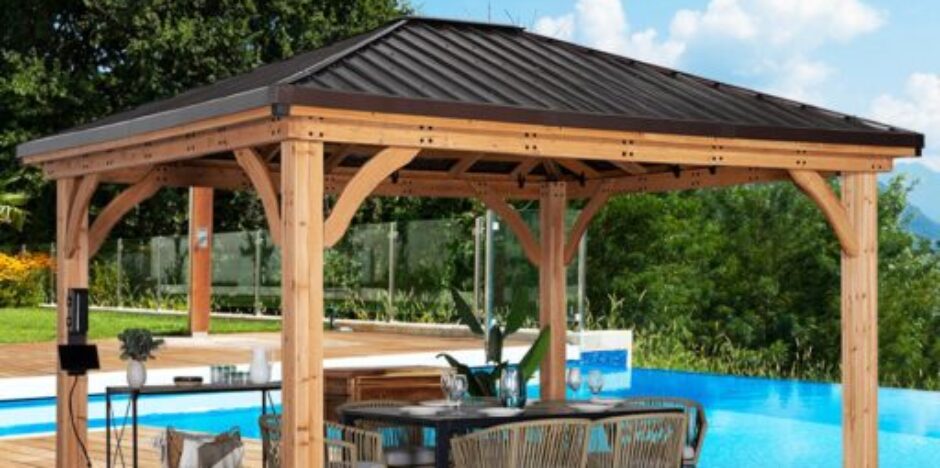
Shopping for a gazebo 10×14 usually means you want real shade for dining or a lounge set without overwhelming a typical suburban patio. The quick answer: a 10×14 footprint delivers about 140 square feet of covered space—enough for a 6–8 person dining table or a sectional plus a coffee table—while still leaving walkways around doors, grills, and planters. If you place it 12–24 inches off the house or fence (to keep gutters, siding, and landscaping accessible), it feels roomy without taking over your yard.
In this size class, cedar is hard to beat for looks, scent, and long-term durability. You also want a strong, low-maintenance roof and hardware that goes together cleanly. That’s why, for most homeowners searching 10×14 (or 14×10—the orientation is the same), our go-to is a Backyard Discovery cedar gazebo with a steel roof and pre-drilled parts that make assembly realistic for two people in a single evening.
Our Pick for a 10×14 Patio: Barrington 14′ x 10′
For a premium, permanent gazebo at this exact size, we recommend the Backyard Discovery Barrington 14′ x 10′ Cedar Wood Outdoor Gazebo. The Barrington series pairs beautiful, pre-stained cedar with a rugged steel roof and organized hardware, so the structure looks custom while going together much faster than most kits. The proportions are spot-on for a standard 12–16 foot-deep patio, and the hip roof sheds rain well while keeping heat off furniture.

Space Planning for a 10×14 Gazebo
- Clearance: Leave 24–36 inches of walkway on the most-used sides. Doors, sliders, and grill zones need swing/approach space.
- Orientation: Turn the 14′ span to match your furniture run. For dining tables, align the length with the table to keep chair scoot room under cover.
- Sun and wind: Face the long side toward afternoon sun for maximum shade. If you get strong prevailing winds, set the open side away from them.
- Height and views: A hip roof gives headroom and keeps sightlines open to the yard. Avoid blocking windows you use for natural light.
- Base and drainage: A level, well-drained concrete or deck surface is ideal. On pavers, plan concrete footings below the pavers so anchors bite into something solid.
- Power and lighting: Conduit or low-voltage runs are easier to install before you set posts. Plan for a fan/light at the ridge and discreet outlets at the corners.
Why Backyard Discovery Works So Well at 10×14
Backyard Discovery has been building cedar outdoor structures for decades. Their kits arrive with labeled, pre-cut, pre-drilled pieces and clearly sorted hardware, which makes a big difference if you’re not a contractor. The cedar resists decay and smells great out of the box, the steel roof is long lasting, and the warranty support is solid. In our experience, that combination is exactly what you want when you’re investing in a centerpiece for your patio.
Watch a Real Backyard Discovery Gazebo Build in 4K
Before you commit to a gazebo, it helps to see one go together in the real world. Preston and his brother built a Backyard Discovery Arcadia 12′ x 9.5′ cedar gazebo in a single evening, start to finish.
In the 4K video below, you can see how the pre-cut, pre-drilled cedar pieces fit together, how the hardware is organized, and how manageable the process is for just two people. The fresh cedar smell, solid posts, and overall build quality are a big part of why we like Backyard Discovery so much.
If you want to see more photos and details from this exact build, Preston also wrote about the process on his personal site: PrestonShamblen.com/backyard-discovery-arcadia-gazebo-setup. It includes tips, notes, and behind-the-scenes details from the same evening.
Assembly Expectations for a 10×14
The Barrington 14′ x 10′ uses the same Backyard Discovery approach you see in the video: pre-cut cedar, pre-drilled holes, and clearly labeled hardware. With a flat base and tools ready, two people can realistically complete the structure in an evening. The key is prep: unbox and stage parts, confirm the layout and post locations, and drive the first fasteners snug but not fully tight until the roof frame is squared. That keeps everything aligned as you go.
Anchoring and Surfaces
- Concrete slab: Easiest. Mark, drill, and anchor per the manual.
- Composite/wood deck: Ensure the posts land over joists or blocking and use appropriate structural hardware.
- Pavers: Core through to concrete footers below the pavers so anchors have real hold, then reinstall pavers cleanly around the post bases.
Final tip: Measure roof overhangs, not just post-to-post spacing, to confirm gutter and fence clearances. Overhangs can extend several inches beyond the posts on all sides and may affect where rain falls.
Bottom Line
If your goal is a handsome, permanent gazebo 10×14 for dining or lounging, the Barrington 14′ x 10′ cedar model hits the sweet spot for size, durability, and straightforward assembly. Plan your clearances, set a level base, and you’ll have a shaded, year-round-ready space that looks custom without the contractor price.


