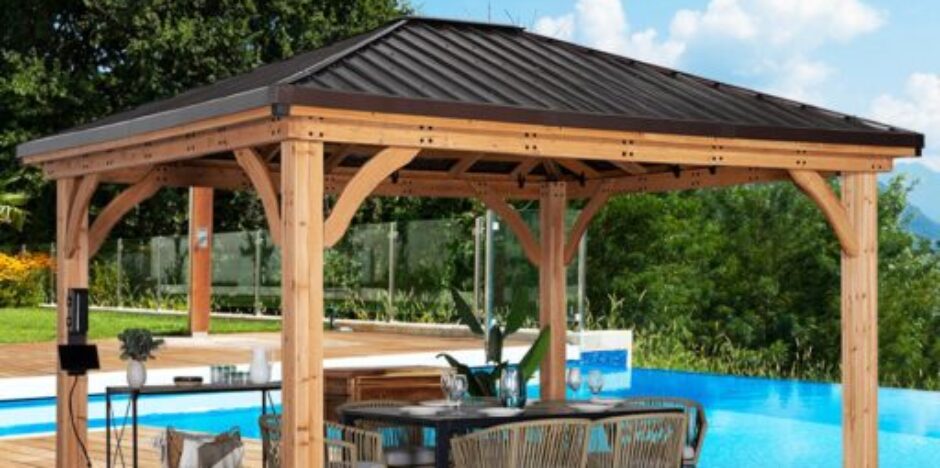
Searching for a beach gazebo usually means one of two things: a temporary canopy for day trips on the sand, or a permanent shade structure for a coastal home. If you want a gazebo that stands up to salt air and wind while adding real outdoor living space at a beach house, go with a permanent, anchored cedar gazebo on a deck, patio, or slab—not a pop-up on sand. For that use, our favorite is the Backyard Discovery Arcadia 14′ x 12′ Cedar Wood Outdoor Gazebo.
Why? Cedar naturally resists rot and insects, it smells great, and it takes finish well for coastal upkeep. Combined with corrosion-resistant hardware and a metal roof, you get a beach gazebo look with the durability you need by the water. Below, I’ll cover what matters near the coast—anchoring, materials, and care—and show you a real-world build that proves two people can assemble one in an evening.
Best beach gazebo for a coastal backyard
For most beach homes, 14′ x 12′ hits the sweet spot: enough shade for a dining set and loungers, while still fitting common patios and decks. The Arcadia’s beefy posts, organized hardware, and pre-cut cedar make layout and assembly straightforward, even for first-timers.

Have a narrow deck or want a more compact footprint? The 12′ x 9.5′ Arcadia size provides intimate seating for four and a grill zone. Larger party areas may step up to a 20′ or 24′ length, but keep wind exposure and anchoring in mind as footprint grows.
Coastal must-haves: materials, anchoring, and placement
- Material choice: Cedar is ideal near the coast for its natural oils. Plan on sealing it yearly with a high-quality exterior or marine-grade finish to slow UV fade and salt exposure. The Arcadia’s metal roof panels and coated fasteners are built to resist corrosion.
- Anchoring: On concrete, use appropriate concrete anchors as specified in the manual. On composite or wood decks, ensure framing under each post can handle the load and uplift; add blocking or footings as required by local code. On pavers, set dedicated concrete footers below the pavers and anchor to those. Direct-to-sand installs aren’t recommended for permanent gazebos.
- Placement: Tuck your beach gazebo on the leeward side of the house when possible. Leave 3–4 feet of walking clearance around posts and avoid dune areas or setback violations. Check HOA and coastal zone permitting before you start.
- Drainage and splash: Keep the base above standing water and away from saltwater splash zones. Rinse posts and hardware with fresh water after storms to minimize corrosion.
Real-life ease: one-evening build, two people
Backyard Discovery kits are designed for homeowners. Pre-drilled parts, labeled hardware, and a logical order of operations keep assembly on track. Plan your tools (impact driver, socket set, ladder, square) and do a dry layout to confirm square before you lag down the posts.
Watch a Real Backyard Discovery Gazebo Build in 4K
Before you commit to a gazebo, it helps to see one go together in the real world. Preston and his brother built a Backyard Discovery Arcadia 12′ x 9.5′ cedar gazebo in a single evening, start to finish.
In the 4K video below, you can see how the pre-cut, pre-drilled cedar pieces fit together, how the hardware is organized, and how manageable the process is for just two people. The fresh cedar smell, solid posts, and overall build quality are a big part of why we like Backyard Discovery so much. They also back their gazebos with a solid warranty and offer many size options, which is why Gazebo.homes recommends the brand.
If you want to see more photos and details from this exact build, Preston also wrote about the process on his personal site: PrestonShamblen.com/backyard-discovery-arcadia-gazebo-setup. It includes tips, notes, and behind-the-scenes details from the same evening.
Care tips for a beach gazebo
- Seal yearly: Apply a quality exterior or marine-grade sealer to the cedar every 12 months in coastal zones.
- Rinse after storms: Hose off salt spray from posts, roof edges, and hardware.
- Mind wind: Keep furniture low-profile and consider tying down umbrellas; close any curtains during high winds.
- Inspect seasonally: Retighten hardware, check anchors, and touch up finish where needed.
Bottom line
If your goal is a long-lasting beach gazebo at a coastal home, choose a permanent, anchored cedar model on a deck or slab. The Backyard Discovery Arcadia 14′ x 12′ Cedar Wood Outdoor Gazebo delivers coastal-ready materials, straightforward assembly, and flexible sizing to fit most patios. With regular sealing and smart placement, it will create dependable shade and a true outdoor room by the beach for years to come.


