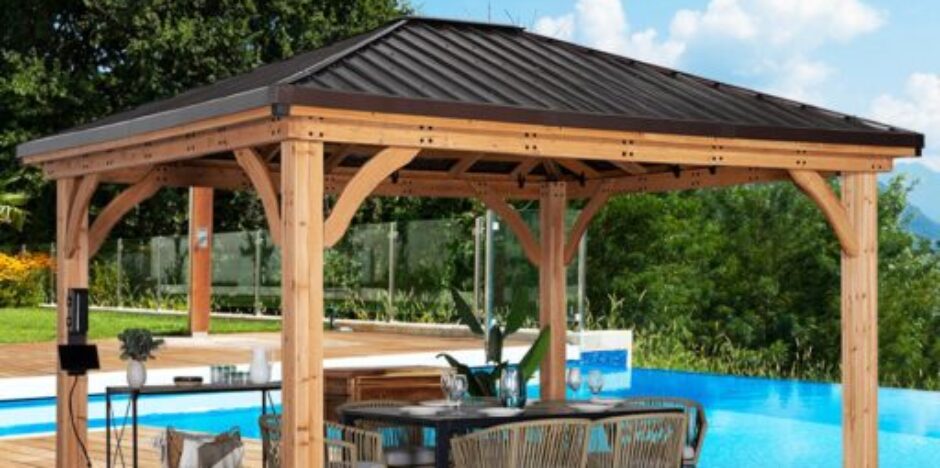
How to anchor a Backyard Discovery gazebo (quick answer)
If you need a straightforward, reliable anchoring strategy, start with concrete footings or heavy-duty surface-mount anchors sized for your local wind and soil conditions. For most homeowners, a Backyard Discovery Arcadia 12′ x 9.5′ Cedar Wood Outdoor Gazebo can be securely anchored with four concrete piers (12–18″ deep) or anchor bolts into a reinforced patio slab. This guide walks you through the practical options, step-by-step instructions, and the tools you’ll need.
In the first sections below you’ll get: recommended anchoring methods, a simple step-by-step anchoring plan for an Arcadia gazebo, hardware suggestions, and safety tips for wind, snow, and uneven sites. The conclusion revisits the best anchor choice for typical suburban backyards.
Why anchoring matters for Backyard Discovery gazebos
Gazebos are large, lightweight structures relative to their roof area. Without proper anchoring, wind uplift or uneven snow loads can shift posts, damage the roof, or create safety hazards. Backyard Discovery gazebos are well-made cedar structures, but the wood itself doesn’t replace mechanical anchors. The good news: the Arcadia family uses pre-drilled parts and solid posts that make adding anchors straightforward.
Recommended anchor types (pros and when to use them)
- Concrete piers with embedded post bases — Best for lawns/soft soil; durable and code-friendly. Dig 12–24″ by 12″ diameter piers and set galvanized post bases into wet concrete.
- Wedge or epoxy anchors into concrete slab — If you have an existing reinforced patio slab, use stainless steel wedge anchors or epoxy anchor studs.
- Surface-mount base plates — Quick when mounting to a deck; ensure deck ledger and joists are sized to transfer loads.
- Earth anchors/ground screws — Good for temporary or low-impact installs; choose rated anchors and add cross-bracing for high winds.
- Spike anchors — Only for very light-duty, low-wind areas; not recommended where code or strong winds are a concern.
Anchoring plan for a Backyard Discovery Arcadia 12′ x 9.5′ gazebo
Below is a practical sequence that works for most homeowners installing the Backyard Discovery Arcadia 12′ x 9.5′:
- 1. Site prep: Check level within 1″ over the footprint, call 811 for locates, and confirm local frost depth and wind codes.
- 2. Layout posts: Measure and mark the four post centers from the Arcadia plans. Double-check diagonals for squareness.
- 3. Install footings: For turf or loose soil, dig 12–18″ deep piers (deeper in frost zones), pour concrete, and set adjustable galvanized post bases while concrete is wet.
- 4. Set posts into bases: Bolt the gazebo posts to the post bases. Use stainless steel lag bolts and fender washers to resist corrosion.
- 5. Level and brace: Temporarily brace posts plumb before adding the beam and roof sections. Check corners and diagonals again.
- 6. Final roof assembly: Complete the Arcadia roof per instructions, then torque anchor bolts to spec and seal exposed wood/fastener interfaces.
Hardware tips: use exterior-grade stainless or hot-dipped galvanized bolts, washers, and nuts. Apply a bead of exterior-grade sealant between metal bases and cedar posts to reduce water pooling. If you’re bolting into existing concrete, use an epoxy sleeve anchor for the highest holding strength.

Anchoring for wind and snow
In high-wind areas, increase footing size and use through-bolts that pass from the post base into the concrete pier with a nut and washer below the slab. For heavy snow regions, verify local snow-load requirements and consider extra diagonal bracing or interior support posts if required by code.
Tools, materials, and common mistakes
- Tools: post hole digger or auger, level, tape, torque wrench, drill/impact driver, concrete tools.
- Materials: concrete, galvanized/stainless post bases, anchor bolts, washers, exterior sealant.
- Common mistakes: shallow footings, undersized anchors, not plumb-checking posts before roof assembly, and failing to account for local frost depth.
Watch a Real Backyard Discovery Gazebo Build in 4K
Before you commit to a gazebo, it helps to see one go together in the real world. Preston and his brother built a Backyard Discovery Arcadia 12′ x 9.5′ cedar gazebo in a single evening, start to finish.
In the 4K video below, you can see how the pre-cut, pre-drilled cedar pieces fit together, how the hardware is organized, and how manageable the process is for just two people. The fresh cedar smell, solid posts, and overall build quality are a big part of why we like Backyard Discovery so much.
If you want to see more photos and details from this exact build, Preston also wrote about the process on his personal site: PrestonShamblen.com/backyard-discovery-arcadia-gazebo-setup. It includes tips, notes, and behind-the-scenes details from the same evening.
Conclusion — best anchor choice
For most homeowners installing the Backyard Discovery Arcadia 12′ x 9.5′, concrete piers with galvanized post bases are the best balance of durability and long-term performance. If you have an existing concrete pad, epoxy or wedge anchors provide strong, quick attachment. Remember to size your anchors to local wind and frost conditions and use corrosion-resistant hardware. And if you want reassurance that the kit goes together quickly, watch Preston’s evening build — a similar Arcadia gazebo is realistic for two people to assemble in a single evening.


