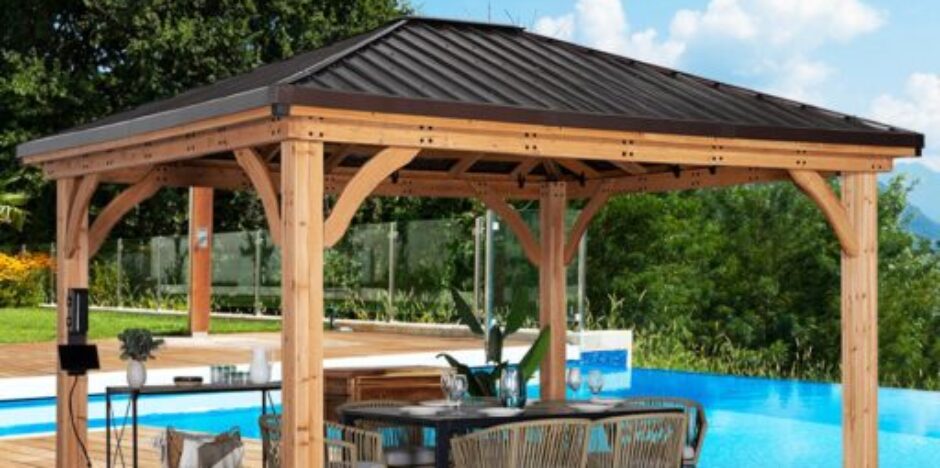
Reinforcing gazebo support posts: a quick answer
If your question is “how do I reinforce gazebo support posts?” the short answer is: assess the existing footing and post condition, then add extra anchoring or a sister post, upgrade to metal post anchors or concrete footings, and add diagonal bracing where needed. These steps prevent wobble, reduce transfer of wind and snow loads to connections, and extend the life of cedar posts.
This article walks through practical options you can do as a homeowner, the tools and hardware you’ll need, when to call a contractor, and why the Backyard Discovery Barrington 12′ x 12′ Cedar Wood Outdoor Gazebo is a good model to use as a reference or replacement when reinforcing posts.
Quick safety check: when to reinforce
- Visible movement when someone leans on the gazebo posts.
- Rot or deep cracks at the post base where the wood meets the ground.
- Rusty or loose hardware on metal anchors.
- Excessive leaning after storms or under snow load.
Practical methods to reinforce gazebo support posts
Below are homeowner-friendly options ranked from least invasive to most permanent. Choose based on how severe the issue is and whether the existing posts are sound.
1) Tighten and replace hardware
Often a loose post is fixed by replacing lag bolts, using longer galvanized or stainless fasteners, and adding through-bolts with washers and nuts. Use a torque-rated socket set and check all connectors.
2) Add metal post anchors or retrofit brackets
Metal anchors that bolt to a concrete pad are an excellent non-invasive upgrade. If the post sits on dirt, pour a small concrete footing, set a galvanized anchor, and then attach the post. This raises the wood off wet ground and reduces rot while adding stiffness.
3) Sistering a post
If a post is cracked but not rotted through, sistering (mounting a new full-length post directly next to the old one and fastening them together with structural screws) restores load capacity. Use pressure-treated lumber for the sister post or a new cedar post to match appearance.
4) Diagonal bracing and cross-braces
Diagonal braces between posts transfer lateral loads to the structure and reduce sway. This is especially effective on rectangular gazebos where wind can twist the frame.
5) Helical piers or new concrete footings
For serious settlement or soft soils, helical piers or deep concrete footings installed by a pro will provide long-term stability. This is the option to choose if multiple posts are leaning or if you’re in a high-wind / high-snow area.
Tools, materials, and step-by-step checklist
- Tools: drill/driver, impact wrench, level, post hole digger or auger, tape measure, saw, socket set.
- Materials: galvanized/stainless bolts, metal post anchors, pressure-treated wood or cedar sister posts, concrete mix or helical piers, exterior construction adhesive.
- Steps: inspect → plan anchor or sistering approach → lift or support gazebo (use temporary shoring) → install anchor or sister post → tighten all connections → seal and finish.
Why the Backyard Discovery Barrington 12′ x 12′ fits this topic
The Backyard Discovery Barrington 12′ x 12′ Cedar Wood Outdoor Gazebo is a good reference model when planning reinforcements for several reasons: it uses full-size cedar posts that are easy to inspect and access, the post-to-beam connections are simple to retrofit with upgraded hardware, and the footprint is manageable for typical yard footings. If you need to replace a post entirely, this model’s parts and dimensions make it straightforward to match a new sister post or bolt in an anchor without custom carpentry.

When to call a pro
If more than two posts are compromised, if you discover major rot at multiple footings, or if your gazebo supports a heavy roof and you notice large deflection, call a structural contractor. Professionals can size helical piers, pour appropriate footings, and ensure the gazebo meets local wind and snow-load codes.
Common homeowner mistakes to avoid
- Skipping temporary shoring — never remove load-bearing fasteners without supporting the structure.
- Using ordinary steel hardware — choose galvanized or stainless outdoors.
- Ignoring soil drainage — keep posts off wet ground and improve drainage to prevent future rot.
Watch a Real Backyard Discovery Gazebo Build in 4K
Before you commit to a gazebo, it helps to see one go together in the real world. Preston and his brother built a Backyard Discovery Arcadia 12′ x 9.5′ cedar gazebo in a single evening, start to finish.
In the 4K video below, you can see how the pre-cut, pre-drilled cedar pieces fit together, how the hardware is organized, and how manageable the process is for just two people. The fresh cedar smell, solid posts, and overall build quality are a big part of why we like Backyard Discovery so much.
If you want to see more photos and details from this exact build, Preston also wrote about the process on his personal site: PrestonShamblen.com/backyard-discovery-arcadia-gazebo-setup. It includes tips, notes, and behind-the-scenes details from the same evening.
Conclusion
Reinforcing gazebo support posts is usually a matter of diagnosis followed by the right anchor, sistering, or footing solution. Start with a careful inspection, use galvanized stainless hardware, and add diagonal bracing where practical. For most homeowners, fixing posts is doable with common tools; for soil or structural issues, hire a pro. The Backyard Discovery Barrington 12′ x 12′ model shows how accessible full-size cedar posts and clear connections make reinforcement straightforward for homeowners.


