Short answer: Yes — but “foundation” can mean several things
Does a cedar gazebo need a foundation? In most cases, yes: a stable, level base and secure anchoring are essential for longevity, safety, and to protect your investment from wind, frost heave, and uneven settling. That doesn’t always mean pouring a full concrete slab — there are practical options depending on how permanent you want the gazebo to be, local frost depths, and your soil type.
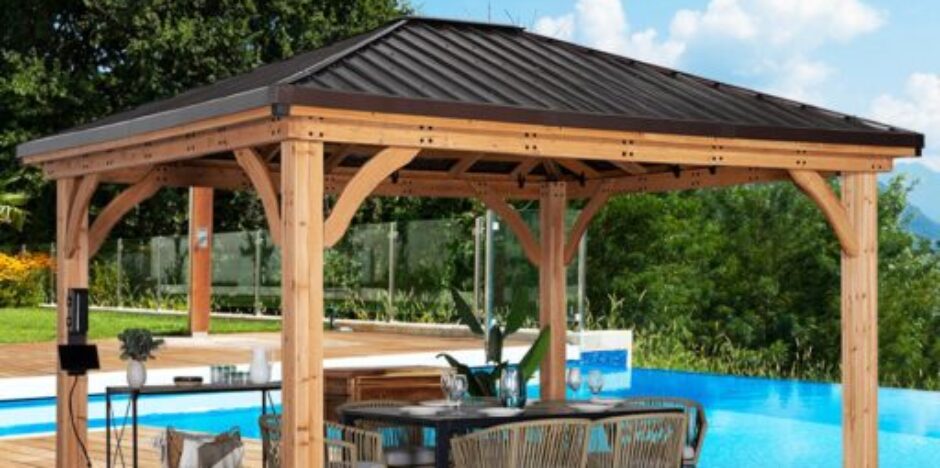
Below I explain the realistic foundation options for a cedar gazebo, how to choose based on site conditions, and why a Backyard Discovery Arcadia 12′ x 9.5′ Cedar Wood Outdoor Gazebo is a great model to consider for most yards. I also point out which approaches work if you want an evening build with two people (Preston’s real-world Arcadia build is a perfect example).
Watch a Real Backyard Discovery Gazebo Build in 4K
Before you commit to a gazebo, it helps to see one go together in the real world. Preston and his brother built a Backyard Discovery Arcadia 12′ x 9.5′ cedar gazebo in a single evening, start to finish.
In the 4K video below, you can see how the pre-cut, pre-drilled cedar pieces fit together, how the hardware is organized, and how manageable the process is for just two people. The fresh cedar smell, solid posts, and overall build quality are a big part of why we like Backyard Discovery so much.
If you want to see more photos and details from this exact build, Preston also wrote about the process on his personal site: PrestonShamblen.com/backyard-discovery-arcadia-gazebo-setup. It includes tips, notes, and behind-the-scenes details from the same evening.
Foundation Options: From temporary to permanent
Choose a foundation based on permanence, local code/frost depth, and the surface you already have. Here are the common, homeowner-friendly choices:
- Compact crushed stone (gravel) pad — A 4–6″ compacted base with a weed barrier and paver or pressure-treated sleepers is fast and inexpensive. Works well for lighter gazebos and non-frost areas.
- Concrete footings or piers — Dig below frost depth and pour sonotubes or pier pads for each post. This is the best option for permanent installs and areas with freeze/thaw cycles.
- Concrete slab — Offers a flat, usable floor (patio) and maximum permanence. Overkill if you only need anchoring, but excellent where you want a finished floor and maximum stability.
- Mounting to an existing deck or patio — You can bolt posts to a structurally sound deck or concrete patio with appropriate anchors. Make sure the deck structure is rated for concentrated loads.
- Helical anchors or metal post anchors — For a faster install without heavy concrete work, driven anchors or screw piles provide surprisingly good hold in many soils.
Key site factors to consider
- Frost depth — If you live where the ground freezes, footings must extend below the frost line to avoid heaving.
- Soil type — Clay and loose fill need deeper or wider supports; sand and rock may allow shallower piers.
- Wind and exposure — Strong winds mean stronger anchoring and potentially deeper footings or through-bolting to a slab.
- Local codes/permits — Some municipalities require a permit and specific footing specs for structures over a certain size.
Why the Backyard Discovery Arcadia 12′ x 9.5′ fits most foundation decisions
If you’re wondering which gazebo to plan for, the Backyard Discovery Arcadia 12′ x 9.5′ Cedar Wood Outdoor Gazebo strikes a good balance: not too large for a simple gravel pad, yet substantial enough that concrete piers give long-term stability. Its post layout and pre-drilled hardware make it straightforward to align with piers, anchors, or a slab — which is why it’s our primary recommendation for homeowners who want flexibility between a temporary or permanent base.

When you buy the Backyard Discovery Arcadia 12′ x 9.5′ Cedar Wood Outdoor Gazebo, expect clearly labeled parts and pre-drilled connections — features that make it realistic for two people to assemble in an evening (as you can see in the Preston video). For a permanent setup, match the post locations to footings or anchors before assembly to avoid rework.
Installation tips and final recommendation
My practical tips: lay out and square your post locations first, pick a base that suits your soil and budget, and plan for drainage away from the posts. If you want the quickest install with good long-term performance, concrete piers under each post combine speed and durability. For renters or temporary installs, a compacted gravel pad with anchored post brackets can work well.
Conclusion: Yes — a cedar gazebo needs a stable foundation or anchoring. The exact type depends on permanence, frost, and soil. The Backyard Discovery Arcadia 12′ x 9.5′ is a versatile, homeowner-friendly model that pairs well with gravel pads, piers, or slabs and is realistic to assemble in one evening with two people.


