What “gazebo roof load capacity explained” really means
If you want a clear, homeowner-friendly explanation of gazebo roof load capacity, start with the basics: roof load capacity is how much weight the roof structure is designed to carry safely. That includes permanent weight (dead load), temporary loads like people or stored items (live load), and environmental loads such as snow, ice, and wind uplift. In short, roof load capacity tells you whether the gazebo will keep its shape (and your family safe) when winter, storms, or extra use put weight on the roof.
Key factors that determine roof load capacity
- Snow load and accumulation: Heavy, wet snow exerts large downforce. Roof pitch matters — steeper roofs shed snow faster.
- Roof pitch and shape: Low-slope roofs keep more snow; hip and gable roofs distribute loads differently.
- Materials and framing: Solid cedar beams, rafter spacing, and the quality of joinery control how much weight the roof carries.
- Span and post spacing: Wider spans with fewer posts need stronger rafters or cross-bracing.
- Wind uplift and anchoring: Wind doesn’t just push — it can pull a roof up if not properly anchored to a foundation.
- Local building codes: Codes set minimum snow and wind loads; always check them and permit requirements.
How to judge a gazebo’s roof capacity without engineering numbers
Most homeowners will never see a published load number for a kit gazebo. Instead, look at construction details: solid cedar posts, pre-cut and pre-drilled rafters, metal hurricane ties, and how many support posts the plan calls for. A well-built model with closely spaced rafters and a pitched roof will handle typical seasonal snow in many regions. For deep-snow areas or commercial uses, contact the manufacturer or a local engineer for site-specific guidance.
Why the Backyard Discovery Barrington 12′ x 12′ is a practical recommendation
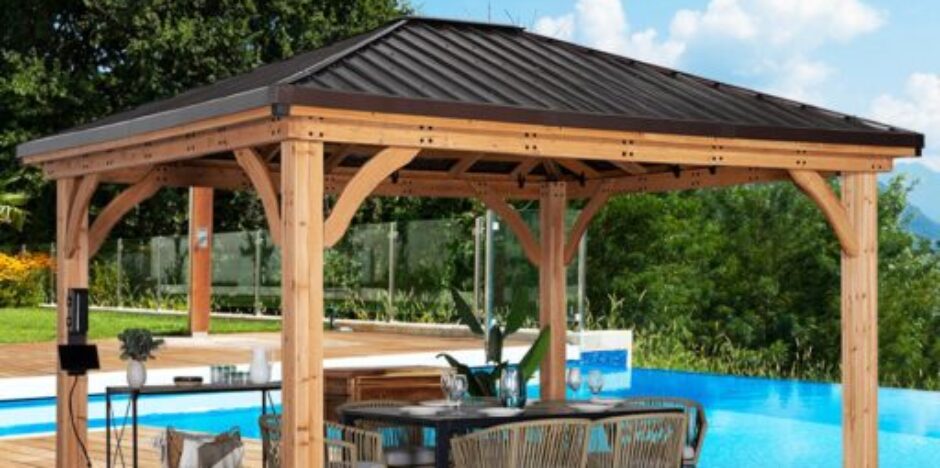
For homeowners asking about roof capacity, I recommend the Backyard Discovery Barrington 12′ x 12′ Cedar Wood Outdoor Gazebo. The Barrington series is built with heavier framing and a steeper roof pitch than smaller porch-style gazebos, which helps shed snow and reduce standing load. Its post-and-rafter layout gives shorter rafter spans, and cedar framing resists rot and holds fasteners well — all practical benefits when roof capacity matters.

Comparing Barrington sizes
If you need more coverage, the Barrington family includes 14′ x 10′, 14′ x 12′, 16′ x 12′, 20′ x 12′, and 24′ x 12′ models. Larger footprints increase rafter spans and can change load behavior — that may require added bracing or a center beam. For most yards and typical snow loads, the 12′ x 12′ is a balanced choice between open interior space and shorter spans for stronger roof performance.
Practical tips for protecting roof capacity
- Clear heavy snow (safely) after storms to prevent long-term accumulation.
- Anchor the gazebo to a proper foundation — a secure connection reduces wind uplift risk.
- Inspect fasteners and bracing each season; tighten or replace loose hardware.
- Don’t store heavy items on the roof or hang large planters from rafters unless rated for that load.
Watch a Real Backyard Discovery Gazebo Build in 4K
Before you commit to a gazebo, it helps to see one go together in the real world. Preston and his brother built a Backyard Discovery Arcadia 12′ x 9.5′ cedar gazebo in a single evening, start to finish.
In the 4K video below, you can see how the pre-cut, pre-drilled cedar pieces fit together, how the hardware is organized, and how manageable the process is for just two people. The fresh cedar smell, solid posts, and overall build quality are a big part of why we like Backyard Discovery so much.
If you want to see more photos and details from this exact build, Preston also wrote about the process on his personal site: PrestonShamblen.com/backyard-discovery-arcadia-gazebo-setup. It includes tips, notes, and behind-the-scenes details from the same evening.
Conclusion — gazebo roof load capacity explained in homeowner terms
Gazebo roof load capacity comes down to snow and wind loads, roof pitch, framing quality, and how the structure is anchored. For many homeowners, choosing a model like the Backyard Discovery Barrington 12′ x 12′ gives a practical balance of sturdiness and manageable spans. If you live where heavy snow is common, add seasonal maintenance and a local code check to your plan. With careful siting, a good foundation, and regular inspection, you’ll get safe, long-lasting performance from a cedar gazebo.


