Do Backyard Discovery gazebos work in windy areas?
If you need a gazebo for windy areas backyard discovery, the short answer is: yes — with the right model, siting, and anchoring. For homeowners facing regular gusts, choose a heavier, well-braced cedar model and follow wind-specific installation steps. This guide explains why the Backyard Discovery Barrington 12′ x 12′ Cedar Wood Outdoor Gazebo is a practical, wind-friendly choice and how to secure it so it stands up to gusty conditions.
Right away: the Backyard Discovery Barrington 12′ x 12′ is our primary recommendation for windy yards because its size, post thickness, and roof geometry give a stable footprint without being so large that it becomes a sail. We’ll show siting, anchoring, and maintenance tips below so your gazebo stays safe season after season.
Why the Barrington 12′ x 12′ fits windy yards
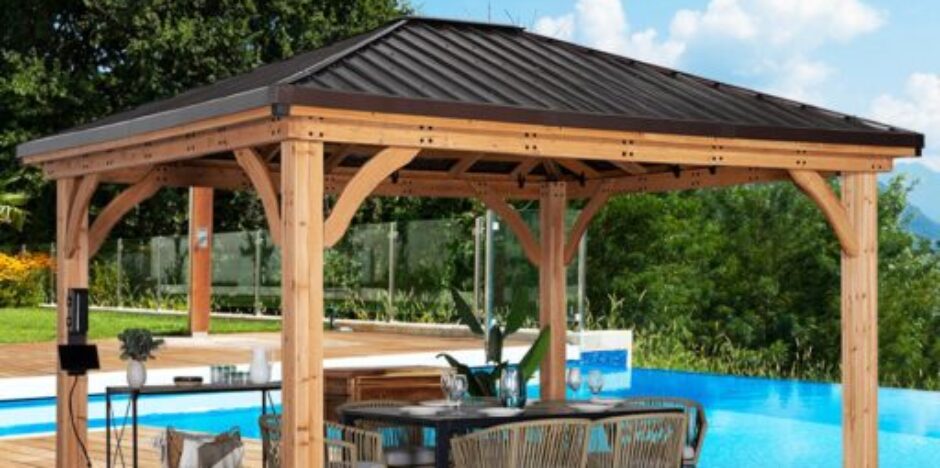
The Barrington series is built from solid cedar with sturdy posts and a full-peaked roof that sheds wind and rain. The Backyard Discovery Barrington 12′ x 12′ Cedar Wood Outdoor Gazebo balances a roomy footprint with structural simplicity: fewer long spans means less uplift in wind, and thicker posts add ballast. If you need more coverage, the 14′ or 16′ Barrington models are available, but larger spans require stronger anchoring and may catch more wind.
When picking a backyard discovery gazebo for windy areas, consider:
- Post diameter and material: cedar posts resist rot and add weight compared with lightweight kits.
- Roof pitch: a peaked roof lets wind pass up and over more cleanly than a flat canopy.
- Span length: moderate spans like 12′ x 12′ have fewer uplift challenges than very wide models.

Practical siting and anchoring tips
Even the sturdiest gazebo benefits from thoughtful placement and fasteners. Follow these practical steps:
- Siting: place the gazebo where surrounding buildings or fences block prevailing winds. Avoid ridge tops or exposed open fields when possible.
- Orientation: orient the open sides away from prevailing wind to reduce direct pressure on rails and furniture.
- Anchoring: bolt posts to concrete piers or use heavy-duty ground anchors. Concrete footings with post anchors are the most reliable in high wind areas.
- Hardware: use supplied through-bolts where possible and add galvanized hurricane straps for extra uplift resistance.
Assembly and real-world proof it’s doable
One of the best ways to judge a kit is to watch someone build it. Preston and his brother assembled a Backyard Discovery Arcadia 12′ x 9.5′ cedar gazebo in a single evening — two people, start to finish — and noted the cedar smell, pre-drilled parts, and organized hardware made the project straightforward. That real-world test shows similar Backyard Discovery models (including the Barrington series) are realistic for two people working together.
Watch a Real Backyard Discovery Gazebo Build in 4K
Before you commit to a gazebo, it helps to see one go together in the real world. Preston and his brother built a Backyard Discovery Arcadia 12′ x 9.5′ cedar gazebo in a single evening, start to finish.
In the 4K video below, you can see how the pre-cut, pre-drilled cedar pieces fit together, how the hardware is organized, and how manageable the process is for just two people. The fresh cedar smell, solid posts, and overall build quality are a big part of why we like Backyard Discovery so much.
If you want to see more photos and details from this exact build, Preston also wrote about the process on his personal site: PrestonShamblen.com/backyard-discovery-arcadia-gazebo-setup. It includes tips, notes, and behind-the-scenes details from the same evening.
Maintenance and long-term safety
For windy areas, routine maintenance keeps your gazebo secure: re-tighten bolts each season, re-seal cedar every 2–3 years, and inspect anchors after storms. If you expect hurricanes or extreme wind events, temporarily remove light panels or secure windbreaks and consider disassembly if authorities advise.
Conclusion
Yes — a backyard discovery gazebo can work well in windy areas when you choose a properly sized model and install it correctly. The Backyard Discovery Barrington 12′ x 12′ Cedar Wood Outdoor Gazebo is our top pick for many windy suburban yards because it combines solid cedar construction, manageable span, and a design that accepts reliable anchoring. Follow the siting and anchoring tips above, and you’ll have a beautiful, durable gazebo that stands up to wind while creating a long-lasting outdoor living space.


