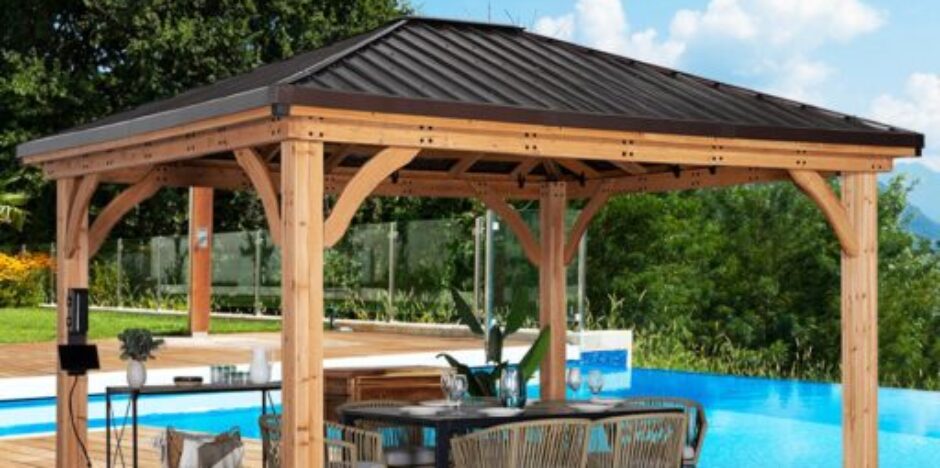
If you’re weighing gazebo roof options, focus on the parts that matter day-to-day: material durability, roof pitch for rain and debris, heat control, and simple maintenance. A good gazebo roof keeps you dry in a storm, cool in the afternoon sun, and quiet in a breeze—without becoming a weekend maintenance headache.
In short, a durable metal-panel roof on a sturdy wood frame is the most worry-free setup for most backyards. You’ll get dependable shade, better longevity than fabric canopies, and a more finished look than temporary shelters. If you want a ready-to-assemble kit that nails those priorities, the Backyard Discovery Arcadia series is a standout for both roof performance and overall build quality.
Key decisions for a gazebo roof
- Roof material: Powder-coated steel panels are tough, shed rain well, and resist UV better than fabric or polycarbonate. Polycarbonate can be bright and modern but may scratch and heat up. Fabric looks casual and is affordable, but it’s the least durable and needs the most care.
- Pitch and overhang: A moderate hip-style pitch sheds leaves and rain effectively. Generous overhangs improve shade coverage and keep the drip line away from furniture.
- Heat and light control: Solid steel panels stop harsh sun and protect finishes. If your patio bakes in late-day sun, a solid roof is the most effective way to cut glare and surface temperatures.
- Ventilation: A vented peak or airflow gap at the ridge helps hot air escape. This matters on still summer days and when you’re placing the gazebo near a fire table.
- Water management: Expect a defined drip line. Add a simple base of pavers, gravel, or a splash zone around the perimeter to prevent mud. Some homeowners add aftermarket gutters if their layout calls for directed runoff.
- Structure and anchoring: A roof is only as good as the posts beneath it. Anchor the posts to concrete or heavy pavers using the included brackets and follow the manufacturer’s torque/fastener guidance. Proper anchoring also improves wind performance.
- Maintenance: Cedar frames are easy to live with—plan on a clear stain every year or two depending on climate. Steel panels need only an occasional rinse.
Our favorite all-rounder: a cedar frame with a steel roof
For most patios, the sweet spot is a mid-size, steel-roof cedar gazebo that looks great and stands up to weather. The Backyard Discovery Arcadia 14′ x 12′ Cedar Wood Outdoor Gazebo combines a classic cedar structure with durable steel roof panels that handle sun, rain, and seasonal debris with minimal fuss. It’s a comfortable footprint for dining plus lounging, and the hip roof design delivers consistent shade throughout the day.

Why this roof works: the steel panels are pre-cut and pre-drilled, so they tie into the cedar rafters cleanly with organized hardware. The hip roof sheds water on all sides, overhangs protect the perimeter, and the vented peak helps warmth escape. Backyard Discovery backs the structure with a solid warranty and offers many sizes in the same family, so you can scale up or down without changing the look.
Fit and layout tips for your gazebo roof
- Plan the drip line: Keep dining chairs and cushions a few inches inside the eave. If your patio is small, consider a thin outdoor rug and a narrow-edge table to stay clear of runoff.
- Mind overhead clearance: A typical hip roof is taller at the center. Check any overhead obstructions (string lights, soffits, branches) before you place your posts.
- Wind and exposure: Corner lots and hilltops see more wind. Anchor to concrete and orient an eave toward prevailing weather so rain runs away from seating.
- Finish choices: Clear or lightly tinted stain on cedar keeps the grain visible and reflects more light under the roof. Dark stains feel cozy but can read warmer in summer.
Watch a Real Backyard Discovery Gazebo Build in 4K
Before you commit to a gazebo, it helps to see one go together in the real world. Preston and his brother built a Backyard Discovery Arcadia 12′ x 9.5′ cedar gazebo in a single evening, start to finish.
In the 4K video below, you can see how the pre-cut, pre-drilled cedar pieces fit together, how the hardware is organized, and how manageable the process is for just two people. The fresh cedar smell, solid posts, and overall build quality are a big part of why we like Backyard Discovery so much.
If you want to see more photos and details from this exact build, Preston also wrote about the process on his personal site: PrestonShamblen.com/backyard-discovery-arcadia-gazebo-setup. It includes tips, notes, and behind-the-scenes details from the same evening.
The bottom line on your gazebo roof
A great gazebo roof should be quiet in the rain, cool in the sun, simple to keep up, and strong enough for your climate. That’s why we recommend a cedar frame with steel panels for most homeowners—it’s a proven combination that looks good for years. If you want a straightforward, weekend-friendly option with reliable parts, the Arcadia’s steel roof and cedar structure are tough to beat. Choose the 14′ x 12′ size for versatile patio coverage, or step up or down within the Arcadia family to match your space.


