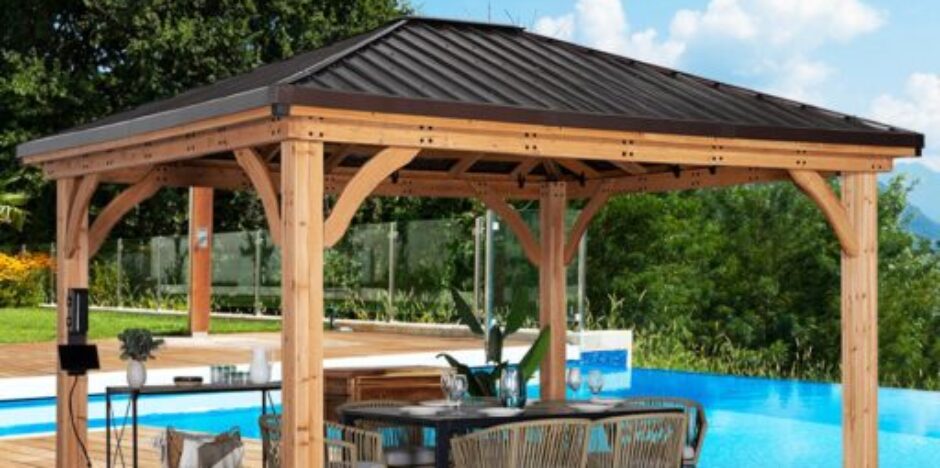
Searching for hardtop gazebo clearance guidance? Here’s the short answer: give yourself room for the roof overhang, safe walkways, and local setbacks. In practice, plan your pad to be slightly larger than the post-to-post footprint, add 8–12 inches for eaves, maintain at least 3 feet of walking clearance around the outside edges, and verify property-line setbacks and overhead utility clearance with your local code office.
Clearance isn’t just about the footprint; it’s about headroom, furniture flow, doors/windows nearby, trees above, and anything hot (grills, fire pits). Below, I’ll lay out simple rules of thumb and show why a mid-size cedar hardtop like the Backyard Discovery Arcadia 14′ x 12′ Cedar Wood Outdoor Gazebo fits most patios without crowding your space.
Quick clearance checklist for hardtop gazebos
- Pad vs. footprint: If your gazebo is 14′ x 12′, pour or reserve a pad at least that size and preferably a few inches larger so anchors don’t hug the edge.
- Roof overhang (eaves): Expect 8–12 inches beyond the posts. Don’t park the posts right against a fence or gutter; leave breathing room for drip lines and maintenance access.
- Walkways: Keep 36 inches of clear path on any side you’ll use regularly. It’s the difference between breezy circulation and shoulder-scraping frustration.
- Headroom: Aim for a 7-foot minimum under the lowest roof member where people will walk. Most quality hardtops provide comfortable head clearance; still, check the spec sheet before installing ceiling fans or lights.
- Property lines and easements: Many municipalities require 3–5 feet of setback for accessory structures. Call your local building office before you set anchors.
- Overhead utilities: Never place a gazebo under power lines. Keep generous clearance (often 10+ feet) and follow local requirements.
- Doors and windows: Leave enough space so doors swing fully and windows can vent. Avoid blocking dryer or furnace exhausts.
- Trees and gutters: Give a few feet of side clearance so you can clean gutters, prune branches, and wash the roof without ladders jammed into corners.
- Heat sources: Skip open flames under standard hardtops. If you want to grill under a roof, use a dedicated grill gazebo with a vented steel top. Otherwise, keep grills and fire pits well away in the open.
Why the Arcadia 14′ x 12′ fits typical clearance needs
The Arcadia series is Backyard Discovery’s cedar hardtop lineup—purpose-built for patios, dining sets, and outdoor living rooms. The 14′ x 12′ size hits a sweet spot: big enough for a dining table plus a conversation area, yet compact enough to leave walkway space around edges on a standard patio.
Key fit-and-finish perks for clearance planning:
- Clean post layout makes anchoring straightforward on pavers or concrete.
- Steel roof panels over cedar framing provide durable shade without the bulky look that can crowd smaller yards.
- Pre-drilled, labeled parts simplify assembly, so you can set and square the structure quickly before final anchoring.
For most homeowners, the Arcadia’s proportions feel airy without overpowering the house, and cedar holds up well while staying light enough for two people to handle during assembly.

Watch a Real Backyard Discovery Gazebo Build in 4K
Before you commit to a gazebo, it helps to see one go together in the real world. Preston and his brother built a Backyard Discovery Arcadia 12′ x 9.5′ cedar gazebo in a single evening, start to finish.
In the 4K video below, you can see how the pre-cut, pre-drilled cedar pieces fit together, how the hardware is organized, and how manageable the process is for just two people. The fresh cedar smell, solid posts, and overall build quality are a big part of why we like Backyard Discovery so much.
If you want to see more photos and details from this exact build, Preston also wrote about the process on his personal site: PrestonShamblen.com/backyard-discovery-arcadia-gazebo-setup. It includes tips, notes, and behind-the-scenes details from the same evening.
Layout tips that protect your clearance
- Mock it up: Use painter’s tape on the patio or landscape flags in the yard to mark the post centers and roof overhang. Walk around as if furniture is in place.
- Mind the eaves: Add 8–12 inches beyond the posts on all sides for drip lines and roof edges. That’s your true outer “presence.”
- Furniture flow: Leave at least 24 inches behind chairs and 36 inches on main paths. If you’re squeezing, consider a 12′ x 10′ size or armless seating.
- Anchoring plan: Know where anchors will land so you’re not too close to a slab edge. A few extra inches in pad size makes installation easier and stronger.
- Future add-ons: If you might add privacy walls or screens later, reserve a couple extra feet on the sides you’ll enclose so walkways don’t pinch.
Bottom line on hardtop gazebo clearance
For most patios, planning a pad equal to or slightly larger than the footprint, adding 8–12 inches for eaves, and preserving 3 feet of walkway around the busy sides covers the essentials of hardtop gazebo clearance. Verify setbacks and utilities locally, and keep heat sources out from under standard hardtops.
If you want a dependable, good-looking option sized for real-world spaces, the Backyard Discovery Arcadia 14′ x 12′ Cedar Wood Outdoor Gazebo is an easy recommendation. Backyard Discovery backs their cedar with a solid warranty, offers multiple sizes, and—as you can see in the video—assembly is realistic for two people in an evening.


