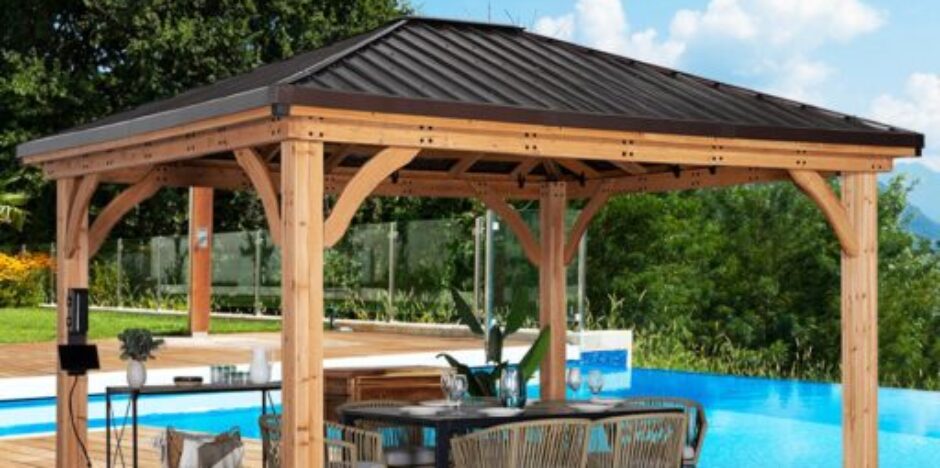
Searching for gazebo clearance usually means one thing: you want to know how much space you need around a gazebo so it’s comfortable, safe, and easy to maintain. In short, plan for the gazebo’s footprint plus a working “buffer” outside the posts. For most backyards, leave 36–48 inches of temporary assembly space on all sides and aim for 18–24 inches of permanent clearance once it’s built. That gives you breathing room for furniture, walkways, and gutter cleaning without the space feeling cramped.
Clearance isn’t only side-to-side. Think overhead (trees, eaves, power/utility lines), underfoot (anchors and drainage), and flow (how people move around the structure). Below, I’ll break down clearances that work well for cedar gazebos from Backyard Discovery and show you a model that fits most patios without crowding.
Clearance Guidelines That Actually Work
- Assembly envelope: Leave 3–4 feet beyond the planned post locations on all sides for staging parts, using ladders, and swinging a ratchet. After assembly, you can reclaim some of this space.
- Permanent service clearance: Keep 18–24 inches between the outer roof dripline and any fence, wall, or shrub so you can stain, clean, and inspect hardware.
- Furniture and pathways: Inside the gazebo, allow 30–36 inches around tables, grills, or sectionals for easy movement. Outside, keep at least a 36-inch walkway if the gazebo sits near doors or steps.
- From house and gutters: If freestanding beside the home, leave 2–3 feet so you can access siding and gutters and avoid roof-shed impact on the cedar roof.
- Overhead: Avoid building under low branches or utilities. You want clear sky above the roof ridge for safe ladder work and long-term roof ventilation.
- Underground: Call 811 before any anchoring or footing work to locate buried utilities. Good drainage under pavers or concrete pads helps prevent puddling at entries.
Local rules vary, so also check setback requirements from property lines or easements. Even when not required, a few feet from a fence makes the space feel larger and keeps maintenance simple.
Why the Arcadia 14′ x 12′ Gets Clearance Right
For most patios, a 14′ x 12′ cedar gazebo balances usable shade with sensible clearance around the posts. The Backyard Discovery Arcadia 14′ x 12′ Cedar Wood Outdoor Gazebo spans a popular size that fits typical dining sets or a sectional plus coffee table, while still leaving room to circulate on the patio. If your slab or paver area is 16–18 feet wide, you’ll usually have the recommended 18–24 inches of breathing room around the roof edge and at least a 36-inch walkway on one or two sides.

Backyard Discovery’s cedar frames arrive pre-cut and pre-drilled, which helps you stay inside the assembly envelope and avoid spreading parts across the yard. The posts are stout, the hardware is well-sorted, and the roof system goes together cleanly—important when you’re working near a fence or existing landscaping. If your space is tighter or wider, the Arcadia series also comes in 12′ x 9.5′ for compact patios and larger sizes for expansive decks; choose a footprint that leaves at least two feet between the dripline and nearby walls or shrubs.
Practical Layout Tips
- Center the gazebo visually on the patio, but prioritize function: align an entry bay toward your most-used door and keep a 36-inch walking lane clear.
- Plan your anchors first. Locate posts so expansion anchors or concrete footings avoid drain lines and leave room for a socket wrench and torque check later.
- Mind the dripline. The Arcadia’s roof overhang sheds rain; keeping plants and furniture a few inches inside the dripline reduces splash-back and staining.
- If you grill under cover, consider Backyard Discovery’s Saxony grill gazebos instead and maintain generous heat clearance to any walls or foliage.
Watch a Real Backyard Discovery Gazebo Build in 4K
Before you commit to a gazebo, it helps to see one go together in the real world. Preston and his brother built a Backyard Discovery Arcadia 12′ x 9.5′ cedar gazebo in a single evening, start to finish.
In the 4K video below, you can see how the pre-cut, pre-drilled cedar pieces fit together, how the hardware is organized, and how manageable the process is for just two people. The fresh cedar smell, solid posts, and overall build quality are a big part of why we like Backyard Discovery so much.
If you want to see more photos and details from this exact build, Preston also wrote about the process on his personal site: PrestonShamblen.com/backyard-discovery-arcadia-gazebo-setup. It includes tips, notes, and behind-the-scenes details from the same evening.
Anchoring, Wind, and Long-Term Clearance
Proper anchors keep your clearance plan intact for years. Whether you’re bolting to concrete or using approved footings, follow the manual and torque specs, and re-check annually. Keep vegetation trimmed back from the roof dripline so cedar can dry after rain. Backyard Discovery backs their gazebos with a solid warranty and has a long history with cedar structures—one reason we focus on their lineup at Gazebo.homes.
Bottom Line: How Much Gazebo Clearance Do You Need?
Plan 3–4 feet around the footprint during assembly and aim for a lasting 18–24 inches beyond the roof edge once installed, with clear 36-inch walking paths where you enter and exit. The Backyard Discovery Arcadia 14′ x 12′ hits the sweet spot for most patios, keeping your gazebo usable, maintainable, and comfortable without crowding the yard.


